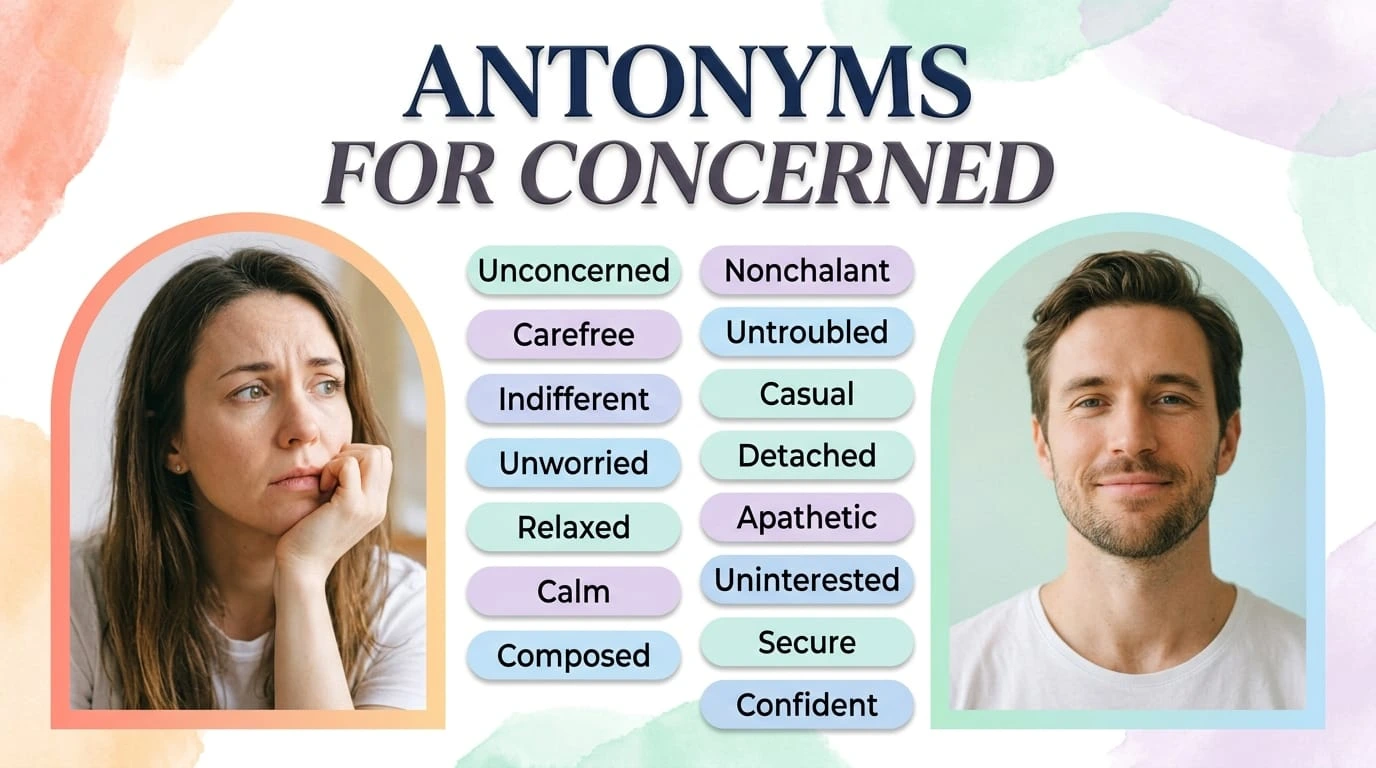
The most common antonyms for concerned are unconcerned, indifferent, carefree, and unworried. The best opposite depends on the meaning.
The Short Answer
The strongest general opposite of concerned is unconcerned. However, other words may fit better depending on the situation:
- Unconcerned: Not worried or troubled.
- Unworried: Feeling no anxiety about something.
- Indifferent: Showing little interest, care, or emotion.
- Carefree: Free from worries or responsibilities.
- Relaxed: Calm and free from tension.
- Secure: Feeling safe and confident.
One important distinction: concerned can also mean involved in or related to something, as in “the people concerned.” In that context, its opposite may be unrelated or uninvolved, not unworried.
Concerned vs. Its Opposites
| Word | Meaning | Example |
| Concerned | Worried or showing care | She was concerned about her exam. |
| Unconcerned | Not worried or troubled | She seemed unconcerned about the exam. |
| Unworried | Free from anxiety | He remained unworried about the results. |
| Indifferent | Not interested or caring | They were indifferent to the outcome. |
| Carefree | Free from worries | The children felt carefree during the holidays. |
| Relaxed | Calm and not tense | She looked relaxed before the interview. |
| Untroubled | Not disturbed or worried | He remained untroubled by the criticism. |
| Nonchalant | Calmly unconcerned, sometimes appearing uninterested | He gave a nonchalant shrug. |
| Inattentive | Not paying attention | The inattentive student missed the instructions. |
| Uninvolved | Not participating or taking part | She stayed uninvolved in the disagreement. |
Concerned: Meaning in Brief
An adjective meaning worried about something, caring about an issue, or involved in a particular matter.
Main antonym Unconcerned: Not worried, troubled, or interested in the matter, depending on context.
After reading this guide, you will understand which opposite fits a feeling of worry, a lack of interest, or a lack of involvement.
Common Opposites of Concerned
1. Unconcerned
Meaning: Not worried, troubled, or bothered by something.
This is usually the closest general antonym of concerned when it means worried.
Example: Although the weather forecast predicted rain, Maya seemed unconcerned.
2. Unworried
Meaning: Not feeling anxious or nervous about a situation.
Use unworried when you specifically mean someone has no anxiety. It is often more directly about feelings than unconcerned.
Example: He was unworried because he had prepared well for the test.
3. Indifferent
Meaning: Having little interest, concern, or emotional response.
Indifferent is stronger than simply being unworried. An indifferent person may not care about the outcome.
Example: The manager seemed indifferent to the employees’ complaints.
4. Carefree
Meaning: Free from worries, stress, or heavy responsibilities.
This word often has a positive tone and describes a general mood or lifestyle.
Example: They spent a carefree afternoon at the beach.
5. Relaxed
Meaning: Calm and free from tension or stress.
Relaxed is useful when concerned describes visible nervousness or tension, but it does not necessarily mean a person does not care.
Example: She stayed relaxed while waiting for the interview to begin.
6. Untroubled
Meaning: Not upset, disturbed, or worried by something.
This word often suits situations where a person remains calm despite a possible problem.
Example: He appeared untroubled by the negative comments.
7. Nonchalant
Meaning: Calm and seemingly unconcerned, sometimes in a way that suggests a lack of interest.
Nonchalant describes how someone behaves or appears; the person may still care privately.
Example: She acted nonchalant when her name was announced.
8. Unbothered
Meaning: Not upset or affected by something.
This is common in everyday and informal English.
Example: He was unbothered by the teasing and continued his work.
9. Uninvolved
Meaning: Not participating in or connected with an activity or situation.
This is an appropriate opposite when concerned means involved in a matter, rather than worried about it.
Example: The witness was uninvolved in the dispute.
10. Unrelated
Meaning: Not connected with a particular subject or matter.
Use this when concerned means “related to” or “affecting” particular people or issues.
Example: The second paragraph contains information unrelated to the main topic.
Choosing the Right Antonym for Concerned
The opposite changes depending on what concerned means in a sentence.
| If concerned means… | Choose an opposite such as… | Example |
| Worried or anxious | Unworried, unconcerned, untroubled | She was unconcerned about the delay. |
| Caring about an issue | Indifferent, uncaring | He was indifferent to their concerns. |
| Nervous or tense | Relaxed, calm | She felt relaxed before the exam. |
| Involved in a matter | Uninvolved | He was uninvolved in the decision. |
| Related to a subject | Unrelated | That detail is unrelated to the question. |
How These Antonyms Differ
- Unconcerned vs. indifferent: An unconcerned person may simply not be worried. An indifferent person shows little interest or care.
- Unworried vs. carefree: Unworried usually refers to a specific concern; carefree often describes a broader feeling of freedom from worry.
- Relaxed vs. unconcerned: A relaxed person is calm, but may still care deeply about the outcome.
- Uninvolved vs. indifferent: Uninvolved describes participation or connection. Indifferent describes a lack of interest or feeling.
- Uncaring vs. unconcerned: Uncaring suggests a lack of compassion, while unconcerned can simply mean not worried.
Examples in Context
Here are natural ways to use concerned and its opposites in everyday English.
- Concerned: My parents were concerned about my health.
- Unconcerned: He appeared unconcerned about the upcoming deadline.
- Unworried: She remained unworried because she had studied thoroughly.
- Indifferent: The committee seemed indifferent to the public’s feedback.
- Carefree: We enjoyed a carefree weekend in the countryside.
- Relaxed: The teacher looked relaxed before the class began.
- Untroubled: She remained untroubled by the unexpected changes.
- Nonchalant: He gave a nonchalant answer to a serious question.
- Uninvolved: I was uninvolved in planning the event.
- Unrelated: These expenses are unrelated to the project.
Grammar and Word Class
Concerned is usually an adjective in these examples. Most of its emotional opposites—unconcerned, unworried, indifferent, carefree, relaxed, and untroubled—also function as adjectives.
Compare these patterns:
- Concerned about: She is concerned about her grades.
- Unconcerned about: He is unconcerned about the delay.
- Indifferent to: They were indifferent to the criticism.
- Unworried about: I am unworried about the interview.
- Unrelated to: This issue is unrelated to our discussion.
Notice that the preposition can change with the adjective. For example, we commonly say concerned about a problem but indifferent to an outcome.
Common Errors to Avoid
Mistake 1: Treating relaxed and unconcerned as exact synonyms
A relaxed person can still be concerned about a problem. Relaxed describes a calm state, while unconcerned suggests a lack of worry or concern.
Mistake 2: Using unrelated when you mean unworried
- Incorrect for the intended meaning: “She was unrelated about the exam.”
- Correct: “She was unworried about the exam.”
Unrelated describes a lack of connection, not a lack of anxiety.
Mistake 3: Using indifferent when you only mean calm
Someone who is indifferent may not care about an outcome. If you simply mean that someone feels calm, relaxed or unworried may be more accurate.
Teacher’s Tip
When choosing an antonym for concerned, first ask: Is the person worried, emotionally invested, or involved in the matter? Use unworried for anxiety, indifferent for lack of interest, and uninvolved for lack of participation.
Quick Antonym Quiz
Choose the best opposite for the sentence:
“Although everyone else was anxious about the results, Liam remained ______.”
A. concerned B. unworried C. involved
Answer: B. unworried. It directly expresses the absence of anxiety.
Frequently Asked Questions
What is the main antonym of concerned?
The main antonym of concerned is unconcerned, especially when concerned means worried or troubled. Other opposites, such as unworried and indifferent, may fit more precisely depending on the intended meaning.
What is a stronger opposite of concerned?
Indifferent can be a stronger opposite when concerned means caring about something. It suggests little interest or emotional involvement, rather than simply feeling calm.
Is carefree an antonym of concerned?
Yes, in some contexts. Carefree describes someone who is free from worries or stress. However, it often describes a general mood or lifestyle rather than a specific lack of concern.
What is the opposite of concerned in formal writing?
Unconcerned is suitable in formal writing when referring to a lack of worry. Use unrelated when concerned means connected with a subject, and uninvolved when it means participating in a matter.
What is the difference between unconcerned and indifferent?
Unconcerned usually means not worried or troubled. Indifferent means showing little interest, care, or emotional response. A person can be unconcerned but still care about the result.
Key Takeaways
- Unconcerned is the best general antonym when concerned means worried.
- Unworried specifically emphasizes the absence of anxiety.
- Indifferent emphasizes a lack of interest or care.
- Uninvolved and unrelated fit contexts involving participation or connection, rather than emotions.
The most accurate opposite depends on the meaning of concerned in the sentence.
Antonyms for Nonchalantly: 10 Strong Opposites

I’m Moazama Akbar, an English language researcher and content writer with a passion for helping people build stronger vocabulary and language skills. I create clear, well-researched guides on antonyms, opposite words, and word meanings, designed to make English learning simple, practical, and enjoyable for students, writers, and learners everywhere.