Monotonous, in a Nutshell
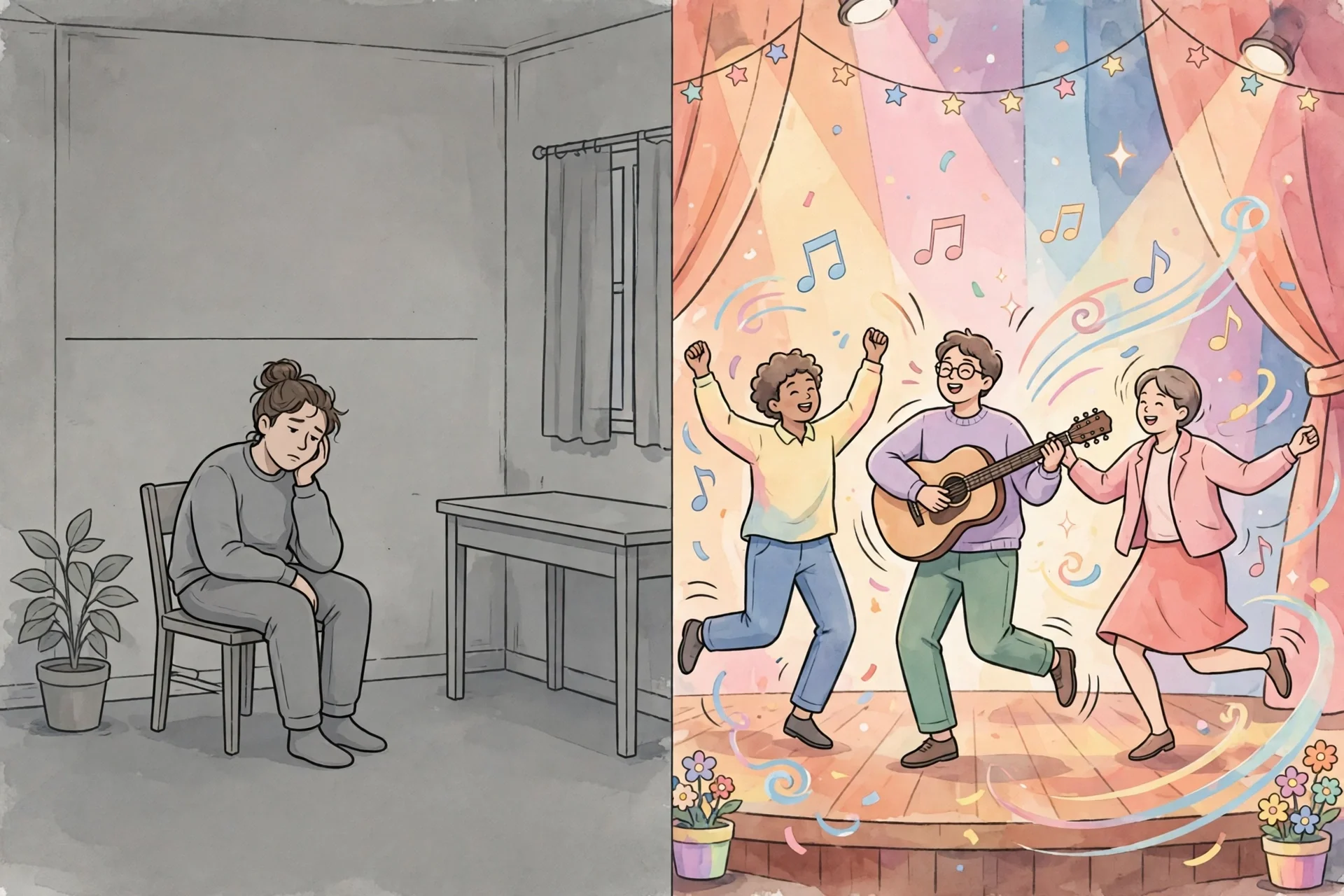
What is the opposite of monotonous? The opposite of monotonous is varied or lively full of change and energy instead of the same sound or routine repeated without end. Words like dynamic, diverse, and stimulating mark variety and movement, where monotonous marks sameness and dullness.
For the full dictionary entry, see monotonous on Merriam-Webster.
What Monotonous Really Means
The most common antonym of monotonous is varied. Monotonous means uttered or sounded in one unvarying tone, or tediously uniform and unvarying. A monotonous voice never rises or falls; a monotonous day never changes. Its opposite is variety itself. Varied is the direct opposite, full of change and difference, while lively is the warmer one, full of energy and spirit that breaks the dullness. Dynamic sits nearby, always moving and changing, never standing still. A monotonous thing is always the same, so its opposites all describe change, energy, and surprise.
Monotonous Next to Its Opposites
| Word | Meaning | Example |
|---|---|---|
| Monotonous | Uttered in one unvarying tone; tediously uniform | His monotonous voice put the class to sleep. |
| Varied | Full of change and difference | The varied menu kept every meal interesting. |
| Lively | Full of energy and spirit | The lively debate woke up the whole room. |
| Dynamic | Always moving and changing | The dynamic speaker held everyone’s attention. |
| Diverse | Showing a great deal of variety | The diverse festival drew crowds from everywhere. |
One Line
Monotonous is an adjective. It describes a voice, a sound, or a routine that stays the same without change: a monotonous lecture, a monotonous commute, a monotonous job. The word covers sound and sameness alike a voice that never changes its pitch, and a life that never changes its pattern. In every case it means one tone, one pace, one thing again and again, with nothing new to break it up.
Monotonous is a one-tone word at heart. It comes from monotone plus -ous, from Greek monótonos, “having one tone,” from mono-, single or alone, plus -tonos, from tónos, “stretching, tightening, pitch of the voice.” English first used it in 1774. The history explains the meaning: a monotonous voice is a voice with only one tone, and every later sense keeps that image of sameness. The picture inside the word is a single stretched string, always sounding the same note, never changing its pitch.
Inside This Monotonous Guide
After reading this guide, you will know:
- The main antonym of monotonous
- Ten useful opposites and when each one fits
- How monotonous differs from varied
- How to use these words correctly in sentences
Ten Opposites of Monotonous
1. Varied (adjective)
Meaning: Full of change and difference; not the same all the time.
Examples:
- The varied menu kept every meal interesting.
- Her varied career took her from teaching to travel writing.
2. Interesting (adjective)
Meaning: Holding the attention; making you want to listen or learn more.
Examples:
- The interesting lecture kept the students awake.
- He told an interesting story about his trip to the mountains.
3. Exciting (adjective)
Meaning: Causing great enthusiasm and eagerness; full of thrill.
Examples:
- The exciting match kept the crowd on its feet.
- An exciting new job waited for her in the city.
4. Lively (adjective)
Meaning: Full of life and energy; bright and cheerful.
Examples:
- The lively debate woke up the whole room.
- A lively market filled the street with colour and noise.
5. Dynamic (adjective)
Meaning: Always moving, changing, and full of energy.
Examples:
- The dynamic speaker held everyone’s attention.
- A dynamic team keeps finding new ways to work.
6. Diverse (adjective)
Meaning: Showing a great deal of variety; made of many different kinds.
Examples:
- The diverse festival drew crowds from everywhere.
- A diverse class brings many views into one room.
7. Stimulating (adjective)
Meaning: Making you think, feel, or act in a lively way; encouraging.
Examples:
- The stimulating talk gave her new ideas for her book.
- A stimulating walk through the old town woke up his senses.
8. Entertaining (adjective)
Meaning: Amusing and enjoyable; keeping people happy and interested.
Examples:
- The entertaining show made the evening fly by.
- Her entertaining stories kept the children laughing for hours.
9. Colorful (adjective)
Meaning: Full of colour, interest, and variety; vivid and bright.
Examples:
- The colorful parade filled the streets with music and flags.
- His colorful life gave him endless stories to tell.
10. Animated (adjective)
Meaning: Full of life and movement; lively and full of spirit.
Examples:
- The animated discussion lasted well past midnight.
- Her animated face showed how much she loved the story.
Picking the Right Opposite for Monotonous
Monotonous wears several meanings, and each one takes a different opposite.
If monotonous means a voice that never changes its tone, use varied or animated. These name a voice that rises and falls. “Her varied tone kept the class listening.”
If monotonous means a dull routine, use exciting or stimulating. They describe days that change and challenge. “The exciting match kept the crowd on its feet.”
If monotonous means a lack of energy, use lively or dynamic. These name movement and spirit. “A lively market filled the street with colour and noise.”
If monotonous means a lack of variety, use diverse or colorful. They describe many kinds and many shades. “The diverse festival drew crowds from everywhere.”
If monotonous means a boring talk or show, use interesting or entertaining. They describe things that hold the attention. “The entertaining show made the evening fly by.”
Monotonous in Everyday Sentences
- In daily life: “The monotonous commute wore him down, but a varied route made it fun again.”
- At school: “The monotonous lecture put half the class to sleep.”
- In the news: “The dynamic speaker turned a dull meeting into a lively debate.”
- In a story: “Her colorful life stood in sharp contrast to his monotonous job.”
- In business: “The team replaced the monotonous routine with a stimulating new plan.”
- In conversation: “Try something exciting this weekend — anything beats another monotonous Sunday.”
Monotonous or Varied?
They are the classic pair, and writers mix them up more than they misuse them. Monotonous means tediously uniform or unvarying: one tone, one pace, one thing again and again. Varied means full of change and difference: many tones, many paces, many things. The overlap comes with routines: a daily walk can be monotonous or varied, depending on how you do it. When the day repeats itself without change, monotonous is the word. When it brings something new each time, varied fits better. The pair comes from different roots: monotonous from Greek monótonos, “having one tone,” and varied from Latin variare, to change. One began with a single note, and the other began with change itself. A monotonous voice never rises or falls, while a varied voice moves up and down like music. The test is simple: if nothing changes, it is monotonous; if things keep changing, it is varied.
Monotonous as a Word: Forms and Uses
Monotonous is an adjective, with the adverb monotonously and the noun monotony, the state of being monotonous. Its root word is monotone, a single unchanging tone, and the related noun monotonousness means the same as monotony. Monotonous takes the comparative more monotonous and the superlative most monotonous: “a more monotonous voice,” “the most monotonous job.” Its useful opposites are adjectives too: varied, lively, dynamic, and diverse. Watch out for monotonous in phrases like “monotonous routine” and “monotonous voice,” where it describes the dullness itself. Monotonous never takes an -ly ending on its own: say “monotonously” for the adverb, and “monotonous” for the adjective.
Mistakes People Make with Monotonous
- ❌ Incorrect: “The varied routine bored everyone.” ✅ Correct: “The monotonous routine bored everyone.” Varied means full of change, so a varied routine cannot bore people with sameness.
- ❌ Incorrect: “His monotonous voice rose and fell with excitement.” ✅ Correct: “His animated voice rose and fell with excitement.” A monotonous voice stays on one tone; a voice that rises and falls is animated.
- ❌ Incorrect: “The monotonous festival drew crowds from everywhere.” ✅ Correct: “The diverse festival drew crowds from everywhere.” A festival that draws many kinds of people is diverse, not monotonous.
- ❌ Incorrect: “The job was monotonous, so I felt excited every day.” ✅ Correct: “The job was monotonous, so I felt bored every day.” Monotonous work brings boredom, not excitement.
Test What You Learned About Monotonous
- Choose the correct antonym: “The teacher’s ___ voice kept the class awake.” A. monotonous B. varied C. dull — Answer: B. varied, because a varied voice changes and holds attention.
- Fill in the blank: “The ___ debate woke up the whole room.” — Answer: lively, full of energy and spirit.
- True or false: “Monotonous means full of change and variety.” — False. Monotonous means tediously uniform and unvarying; varied means full of change.
Monotonous Questions, Answered
What is the opposite of monotonous?
The most common opposite of monotonous is varied or lively full of change and energy instead of the same sound or routine repeated without end.
What is a stronger opposite of monotonous?
Dynamic is stronger than varied, because it means always moving and changing, full of energy. Exciting is also strong: it means full of thrill and enthusiasm.
Can “interesting” always replace the opposite of monotonous?
No. Interesting fits a talk or a story that holds attention, but diverse fits a group of many kinds, and lively fits a room full of energy, so the specific word is usually better.
What is the difference between monotonous and varied?
Monotonous means tediously uniform or unvarying, one tone and one pace. Varied means full of change and difference, many tones and many paces.
Is monotonous appropriate in formal writing?
Yes. Monotonous is a standard word in formal and informal writing, and it suits essays, reports, and everyday speech alike.
The Final Word on Monotonous
The opposite of monotonous depends on the sense: varied and diverse answer sameness, lively and dynamic answer a lack of energy, exciting and stimulating answer a dull routine, and interesting and entertaining answer a boring talk. Keep monotonous for one tone repeated without change, remember that it comes from Greek monótonos, “having one tone,” and you will choose the right opposite every time.

I’m Moazama Akbar, an English language researcher and content writer with a passion for helping people build stronger vocabulary and language skills. I create clear, well-researched guides on antonyms, opposite words, and word meanings, designed to make English learning simple, practical, and enjoyable for students, writers, and learners everywhere.