The best antonyms for vast are tiny, small, little, limited, and narrow. Vast describes something very great in size, amount, or extent, like a vast desert or a vast amount of knowledge. Its opposites describe things that are small in size, short in range, or restricted in amount.
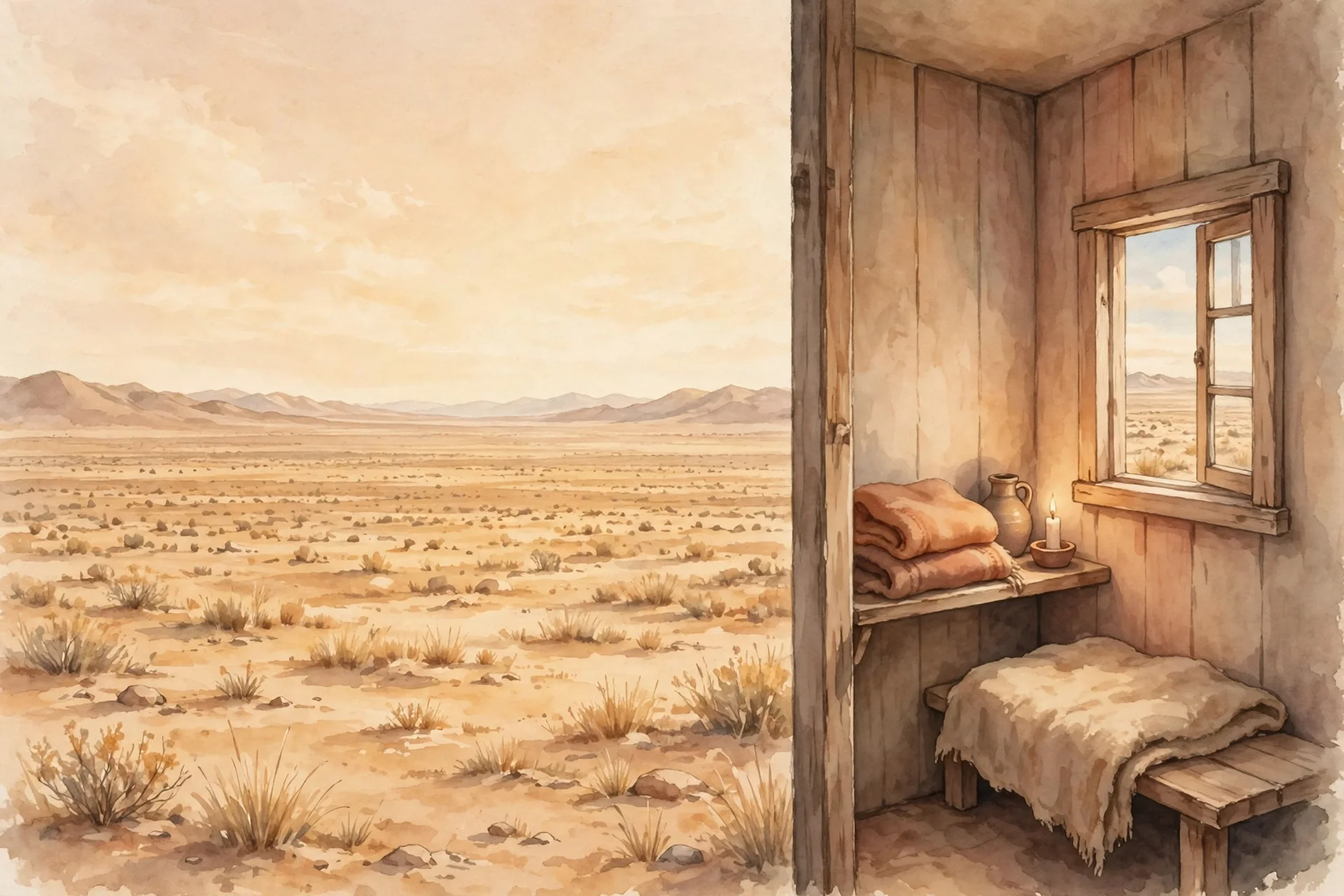
When you stand at the edge of a desert and see sand running to the horizon, one word fits the scene: vast. But what do you say when the scene is the opposite, a small room, a tiny garden, a limited budget? This article gives you ten clear antonyms for vast, with meanings and examples, so you can pick the right opposite every time.
What Does Vast Mean? A Quick Look at Vast
Vast is an adjective that means very great in size, amount, degree, intensity, or especially in extent or range. A vast desert is huge in area. A vast amount of knowledge is huge in quantity and a vast difference is huge in degree. The word always points to something that goes far beyond ordinary limits.
Vast can also be a noun, though this use is now mostly literary. As a noun, vast means a boundless space, as in the phrase “the vast of heaven” from John Milton. In everyday writing, you will meet vast almost always as an adjective. It is pronounced /ˈvæst/ in American English and /vɑːst/ in British English, its comparative is vaster or more vast, and its related noun is vastness.
The Origin of Vast: From Empty Deserts to Vast Spaces
Vast comes from Latin vastus, a word that carried two ideas at once: “devoid of habitation, desolate, dreary” and “of great size, immense”. The two ideas probably belonged to two separate words in early Latin that merged over time. The link between them is easy to see. An empty desert is both desolate and immense, and the same word covered both feelings.
Vast reached English through French vaste in the 1570s, and Merriam-Webster gives its first known use as an adjective in 1585. The noun use followed in 1604. In the 1630s, the meaning “very great in quantity or number” appeared, and by the 1670s it had grown to cover “very great in degree” as well. The old sense of empty and desolate still echoes today, which is why vast fits open spaces like deserts, oceans, and plains so well.
How Vast Is Used in Everyday Writing
Vast works before nouns and after linking verbs. You can write “a vast plain”, “a vast library”, or “the difference was vast”. It pairs naturally with words about space, amount, and knowledge: vast expanse, vast ocean, vast desert, vast majority, vast amount, vast knowledge, vast difference.
Vast also appears in common phrases. “The vast majority” means nearly all of a group. “A vast improvement” means a very large improvement. “Vast sums of money” means very large amounts of money.
Vast vs Small: The Core Difference
Small and vast sit at opposite ends of the same scale. Vast means far beyond ordinary size. Small means below ordinary size. Between them sit words like big, large, and medium, which describe size without the extreme feeling that vast and small carry.
The difference is not only about physical size. Vast can describe things you cannot touch: knowledge, time, difference, and experience. A vast amount of time is the opposite of a little time and a vast difference is the opposite of a tiny difference. A vast store of knowledge is the opposite of limited knowledge.
10 Antonyms for Vast You Should Know
1. Tiny (adjective)
Meaning: Extremely small in size or amount, much smaller than usual.
Examples:
- The tiny cabin sat alone at the edge of the forest.
- She added a tiny pinch of salt to the soup.
2. Small (adjective)
Meaning: Little in size, amount, or degree, the most general opposite of vast.
Examples:
- They live in a small flat near the station.
- A small mistake in the figures caused a big delay.
3. Little (adjective)
Meaning: Small in size or amount, often with a gentle or warm feeling.
Examples:
- The little garden behind the house was full of flowers.
- He saved a little money every week for the trip.
4. Limited (adjective)
Meaning: Restricted in size, amount, or range, with clear boundaries.
Examples:
- The shop has a limited range of books in stock.
- Our time for the visit was limited to one hour.
5. Narrow (adjective)
Meaning: Small in width or range, the opposite of vast when vast means wide or far reaching.
Examples:
- The narrow lane led down to the river.
- She took a narrow view of the problem.
6. Minute (adjective)
Meaning: Extremely small, often too small to see easily. Pronounced my-NOOT.
Examples:
- The watchmaker studied the minute parts of the clock.
- There was a minute difference between the two shades of blue.
7. Microscopic (adjective)
Meaning: So small that it can only be seen with a microscope, or extremely tiny.
Examples:
- The lab found microscopic traces of dust on the lens.
- The chance of error was microscopic.
8. Compact (adjective)
Meaning: Closely and neatly packed into a small space, small but well arranged.
Examples:
- The compact kitchen had everything within easy reach.
- He wrote a compact guide that fits in a pocket.
9. Cramped (adjective)
Meaning: Uncomfortably small, with too little room to move or breathe freely.
Examples:
- The cramped office had four desks and no window.
- Passengers sat in cramped seats for the whole flight.
10. Finite (adjective)
Meaning: Having limits or an end, the opposite of vast when vast means without bounds.
Examples:
- Our resources are finite, so we must spend them with care.
- The project has a finite budget and a fixed deadline.
Vast or Tiny? A Side by Side Comparison
| Word | Meaning | Best when you mean |
|---|---|---|
| Vast | Very great in size, amount, or extent | Something that spreads far, like a desert |
| Tiny | Extremely small | Something much smaller than usual |
| Small | Little in size or amount | The plain, general opposite of vast |
| Little | Small, often with warmth | A small thing you feel fond of |
| Limited | Restricted in size or range | An amount or time with clear bounds |
| Narrow | Small in width or range | A lane or a view that is tight |
| Minute | Extremely small, hard to see | A detail barely there |
| Microscopic | Visible only with a microscope | A trace too small to notice |
| Compact | Small but neatly packed | A space that fits a lot in little room |
| Cramped | Uncomfortably small | A room with too little space |
| Finite | Having limits or an end | A budget that will run out |
The table shows a simple rule. Vast points outward, to things without visible limits. Its opposites point inward, to things with clear edges, small size, or a fixed end.
Choosing the Right Opposite of Vast
Pick the antonym that matches the kind of vastness you are undoing. For physical size, tiny, small, and little are the safest choices and for a small amount of something, limited and finite work best. For a tight space, narrow, compact, and cramped each add their own shade of meaning.
Tone matters too. Tiny sounds stronger than small, and it often adds surprise. Little sounds warmer than small, and it suits things we like. Compact sounds positive, because it praises good use of space. Cramped sounds negative, because it complains about too little space. Finite sounds formal and exact, and it suits budgets, resources, and numbers.
Common Mistakes With Vast and Its Opposites
Mistake 1: Using vast for anything big. A large room is not a vast room. Vast needs a sense of scale that feels hard to measure, like a plain, an ocean, or a store of knowledge. For ordinary big things, use large, big, or huge.
Mistake 2: Using tiny for a small amount of time or money. Tiny describes size more than amount. For amounts, limited or little fits better. Say “a limited budget”, not “a tiny budget”, unless you want a playful tone.
Mistake 3: Confusing vast with huge or enormous. Huge and enormous describe bulk and mass. Vast describes extent and range. A mountain is huge. A desert is vast. Keep the two apart and your writing will be sharper.
Mistake 4: Using “vastest” in formal writing. Both vaster and more vast are correct, and vastest and most vast are both correct too. In formal writing, “more vast” and “most vast” sound smoother. Save “vaster” and “vastest” for casual writing and speech.
Mistake 5: Reaching for the wrong opposite. The opposite of “a vast majority” is “a small minority”, not “a tiny majority”. The opposite of “vast knowledge” is “limited knowledge”, not “narrow knowledge”. Match the opposite to the noun, not only to the word vast.
Vast in Real Life: Examples That Show the Difference
Vast and its opposites show up everywhere once you start looking. A farmer looks out over a vast field and then walks into a small barn. A teacher holds a vast store of knowledge and then explains one tiny fact at a time. A city has a vast network of roads and a narrow lane where cars can barely pass.
In business, a company may report vast profits one year and a limited budget the next. In travel, a vast ocean separates two continents, while a compact cabin holds four people on a small boat. In daily life, a vast difference in price can come down to one minute detail, like a single word in a contract.
Try this exercise. Take a sentence with vast and rewrite it with an opposite. “The library held a vast collection of books” becomes “The shelf held a small collection of books”. The meaning flips cleanly, and the sentence stays natural. That is the sign of a good antonym pair.
Vast in Literature and Everyday Speech
Vast has a long life in literature. Milton wrote of “the vast of heaven”, using vast as a noun for boundless space. Shakespeare wrote of “the empty, vast, and wandering air”, using the older sense of empty and desolate. Pope wrote of “the watery vast”, the sea seen as an endless space. These writers chose vast because no smaller word could hold the scale they meant.
In everyday speech, vast is common too. People say “a vast improvement”, “the vast majority”, and “a vast amount of time” without thinking. Its opposites are just as common: tiny house, small talk, little secret, limited time, narrow escape. Each opposite pairs with its own set of nouns, just as vast pairs with deserts, oceans, and majorities.
Vast Amounts and Vast Spaces: When Vast Fits Best
Vast fits best in two places: vast spaces and vast amounts. Vast spaces are deserts, oceans, plains, skies, and steppes, places where the eye finds no edge. Vast amounts are knowledge, money, time, and difference, things measured in quantity or degree rather than in metres.
When you mean a vast space, the best opposites are narrow, compact, cramped, and tiny. A narrow lane is the opposite of a vast plain. A cramped room is the opposite of a vast hall. When you mean a vast amount, the best opposites are limited, finite, little, and small. A limited budget is the opposite of vast wealth. A little time is the opposite of a vast amount of time.
Vast Words to Avoid When You Mean Small
Some words look like opposites of vast but are not. Huge, enormous, immense, gigantic, colossal, and massive all mean very big, so they agree with vast instead of opposing it. Using one of them as an opposite will confuse your reader.
The safest path is simple. For size, use tiny, small, or little. For amount or range, use limited or finite. For width, use narrow.
Frequently Asked Questions About Vast Antonyms
What is the opposite of vast?
The best general opposite of vast is small, and the strongest opposite is tiny. For amounts and ranges, limited and finite fit better. For width, narrow is the right choice. The best opposite depends on what kind of vastness you mean, size, amount, or extent.
Is small the best antonym for vast?
Yes, small is the safest general opposite, because it covers size, amount, and degree without adding extra meaning. Tiny is stronger and more dramatic. Little adds warmth. Limited and finite suit amounts and budgets. Small works in almost every sentence where vast works.
What is the difference between vast and huge?
Vast usually suggests immensity of extent, how far something spreads. Huge suggests great bulk or mass. A desert is vast because it stretches to the horizon. A mountain is huge because it rises in great bulk. The two words overlap, but vast points to range and huge points to mass.
Can vast describe amounts as well as places?
Yes. Vast describes amounts, knowledge, time, and differences as well as places. You can write “a vast amount of money”, “vast knowledge”, and “a vast difference”. Its opposites follow the same pattern: “a limited amount of money”, “limited knowledge”, and “a minute difference”.
What is the noun form of vast?
The noun form is vastness, which means the quality or state of being vast. Vast itself can also be a noun in literary use, meaning a boundless space, as in “the vast of heaven”. In everyday writing, vastness is the form you will use most often.
Conclusion: Vast Made Simple
Vast means very great in size, amount, or extent, and its opposites take that greatness away. Tiny, small, and little shrink its size. Limited and finite bound its amount. Narrow tightens its width. Minute and microscopic make it almost invisible. Compact and cramped close in its space. Learn more about vast on Merriam-Webster and you will see how one old Latin word grew into a tool for deserts, oceans, knowledge, and time.

I’m Daniel Carter, a language enthusiast and content writer focused on the fascinating world of antonyms and vocabulary. I break down word meanings and opposites into simple, practical guides helping readers build a richer vocabulary, understand language more deeply, and speak or write with greater confidence.