The Opposite of Wriggled at a Glance:
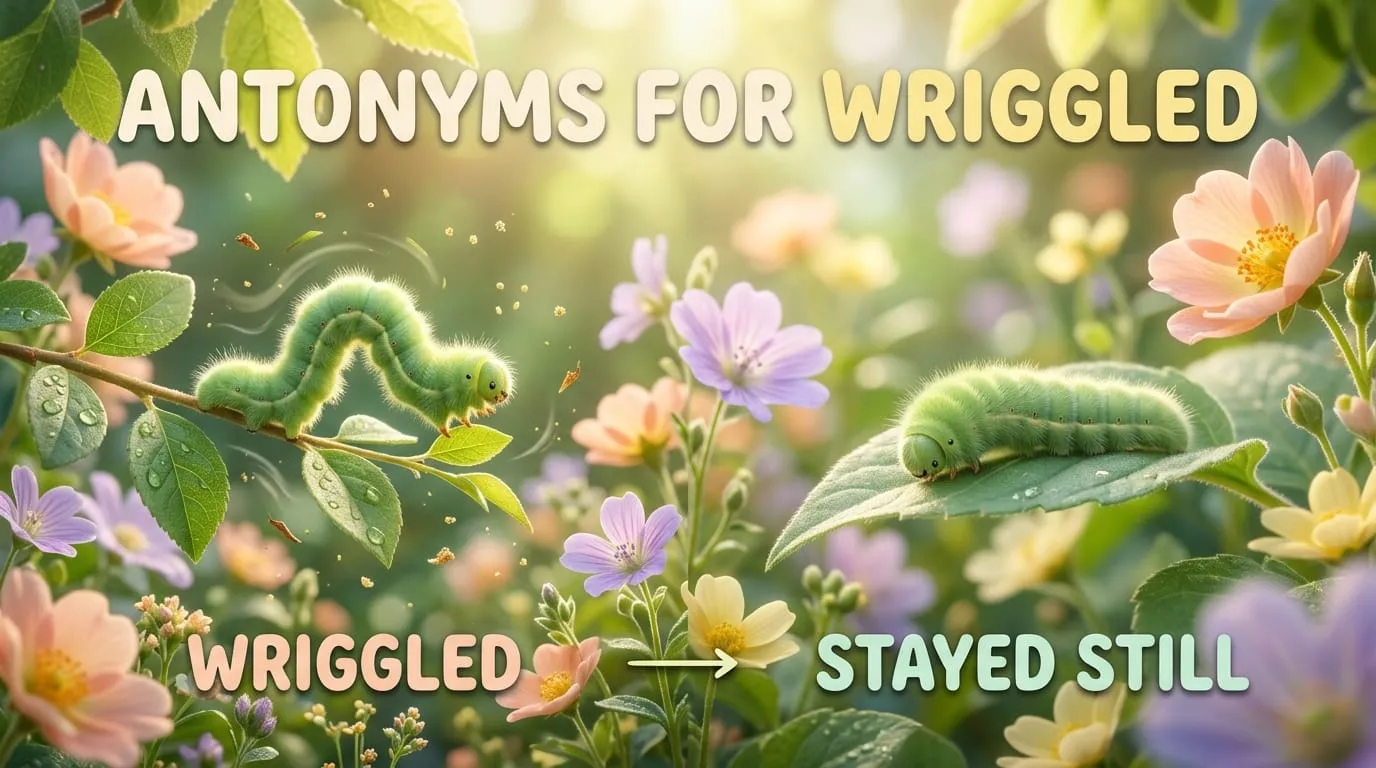
The strongest antonyms for wriggled are stayed still, remained still, held still, froze, and stilled. Wriggled means moved with small, twisting motions, while these opposites describe keeping the body or object still and controlled.
Quick Answer
The most natural opposite of wriggled is stayed still or remained still. Depending on the context, froze, stopped, settled, and held still can also work.
Because wriggled is the past tense of the verb wriggle, its opposites are usually verbs or verb phrases rather than a single fixed antonym.
Wriggled and Its Antonym
| Word | Meaning | Example |
| Wriggled | Moved with small twisting or turning motions | The puppy wriggled in my arms. |
| Stayed still | Did not move | The puppy stayed still in my arms. |
| Froze | Suddenly stopped moving | The puppy froze when it heard the noise. |
| Held still | Kept something or someone from moving | She held the child still. |
Meaning in Brief
Wriggled: Moved by twisting, turning, or making small repeated movements.
Main antonym: stayed still remained in the same position without moving.
The word wriggled can describe people, animals, body parts, or objects that move in a twisting or restless way.
What You’ll Learn
- The main opposites of wriggled
- How each antonym differs
- Which opposite fits different situations
- How to use these words naturally in sentences
- Why stayed still is often more accurate than a single-word antonym
Common Opposites of Wriggled
1. Stayed Still
Stayed still is one of the clearest opposites of wriggled. It means remaining in the same position without movement.
Example:
The baby wriggled at first but eventually stayed still.
2. Remained Still
Remained still has almost the same meaning as stayed still but sounds slightly more formal.
Example:
The patient remained still during the examination.
3. Held Still
Held still means keeping someone or something from moving.
Example:
The nurse held his arm still while applying the bandage.
This is especially useful when another person controls the movement.
4. Froze
Froze means suddenly stopped moving. It can describe a physical reaction or a moment of fear, surprise, or shock.
Example:
The rabbit froze when it noticed the fox.
Unlike stayed still, froze often suggests a sudden change from movement to complete stillness.
5. Stopped
Stopped means ceased moving or performing an action.
Example:
The child stopped wriggling when his mother called him.
It is a broad opposite, so it is less specific than stayed still.
6. Settled
Settled means became calm, stable, or still after movement.
Example:
After a few minutes, the restless puppy settled beside its owner.
This works well when wriggled suggests restlessness rather than simple physical movement.
7. Sat Still
Sat still is a natural contextual opposite when someone is moving while sitting.
Example:
The student finally sat still during the lesson.
8. Stood Still
Stood still works when the subject is standing and stops moving.
Example:
The horse stood still while the rider adjusted the saddle.
9. Remained Motionless
Remained motionless means did not move at all. It is more formal and stronger than stayed still.
Example:
The actor remained motionless throughout the scene.
10. Became Motionless
Became motionless emphasizes the transition from movement to complete stillness.
Example:
The snake became motionless as the light approached.
11. Calmed Down
When wriggled describes restless physical behavior, calmed down can be a useful contextual opposite.
Example:
The child calmed down and listened to the teacher.
It is not a direct antonym of wriggled in every sentence, because it focuses on behavior rather than physical movement.
12. Kept Still
Kept still means deliberately avoided moving.
Example:
She kept still while the photographer adjusted the camera.
Choosing the Right Antonym
The best opposite depends on what wriggled means in the sentence.
| If wriggled means… | A useful opposite |
| Made twisting movements | Stayed still |
| Moved restlessly | Settled |
| Suddenly stopped moving | Froze |
| Was physically restrained | Held still |
| Stopped moving generally | Stopped |
| Did not move at all | Remained motionless |
| Became calm | Calmed down |
For example:
- The puppy wriggled in my arms. → The puppy stayed still in my arms.
- The rabbit wriggled nervously. → The rabbit froze.
- The child wriggled during the examination. → The child remained still during the examination.
This shows why there is no single antonym that works perfectly in every context.
How These Antonyms Differ
Stayed Still vs. Froze
Stayed still simply means not moving.
Froze often suggests sudden or involuntary stillness.
The model stayed still for the photograph.
The deer froze when it heard a sound.
Remained Still vs. Remained Motionless
Both indicate a lack of movement, but remained motionless is stronger and more formal.
He remained still during the test.
The statue remained motionless in the empty hall.
Settled vs. Stayed Still
Settled suggests becoming calm after movement. Stayed still only describes the absence of movement.
The baby settled after being held.
The baby stayed still while the doctor examined her.
Held Still vs. Stayed Still
Held still usually involves deliberate control or restraint. Stayed still describes the subject’s own lack of movement.
She stayed still for the picture.
The doctor held his hand still while treating the cut.
See the Antonyms in Action
- The puppy wriggled in the boy’s arms, then stayed still.
- The little girl wriggled in her chair but eventually settled down.
- The deer froze when it heard a branch snap.
- The patient remained still during the scan.
- The nurse held the patient’s arm still.
- The horse stood still while the groom brushed its coat.
- The students sat still while the teacher explained the experiment.
- The snake became motionless when the light was switched on.
Grammar and Word Forms
Wriggled is the simple past tense and past participle of the verb wriggle.
- Present: wriggle
- Past: wriggled
- Present participle: wriggling
Examples:
- The baby wriggles when tired.
- The baby wriggled in her mother’s arms.
- The baby is wriggling on the floor.
Its common opposites are also verbs or verb phrases:
- stayed
- remained
- froze
- stopped
- settled
- held still
A Useful Language Tip
Wriggle describes a particular kind of movement, not movement in general. Therefore, still, motionless, or remained still are usually stronger antonym choices than simply stopped.
Common Errors to Avoid
A common mistake is assuming that stopped is always the perfect opposite of wriggled.
❌ The puppy wriggled, so its opposite is stopped.
✅ The puppy wriggled, so it stayed still.
Stopped can mean that movement ended, but it does not necessarily describe the resulting state of stillness.
Another important point is that calmed down is only an appropriate contextual opposite when wriggled suggests restless behavior.
Teacher’s Tip
When you need a direct opposite of wriggled, think “moved with twisting motions” → “stayed still.” Then choose a more specific word such as froze, settled, or held still when the sentence gives you a particular situation.
Quick Antonym Quiz
Which word is the best opposite in this sentence?
The puppy wriggled in the veterinarian’s arms but eventually ______.
A. twisted
B. stayed still
C. squirmed
Answer: B. stayed still
“Stayed still” directly contrasts with the puppy’s twisting and restless movement.
Synonyms for Wriggled
The word wriggled describes small, twisting, turning, or restless movements. Depending on the context, these synonyms can express slightly different types of movement.
| Synonym | Meaning | Example |
| Squirmed | Moved around restlessly, often because of discomfort | The child squirmed in his seat. |
| Twisted | Turned or bent the body or part of the body | She twisted her body to reach the handle. |
| Writhed | Twisted or moved with strong discomfort or pain | The injured animal writhed on the ground. |
| Squelched | Moved with a wet, soft, or squeezing motion | His muddy boots squelched through the field. |
| Shuffled | Moved slowly while dragging the feet | The tired man shuffled toward the door. |
| Jiggled | Moved with small, quick shaking movements | The puppy jiggled excitedly in the basket. |
| Thrashed | Moved violently and uncontrollably | The fish thrashed in the net. |
| Fidgeted | Made small restless movements | The student fidgeted during the long lecture. |
| Swayed | Moved gently from side to side | The child swayed in the chair. |
| Twirled | Turned around repeatedly | The dancer twirled across the stage. |
Which Synonym Fits Best?
- Squirmed → restless or uncomfortable movement
- Twisted → turning or bending movement
- Writhed → intense movement caused by pain or distress
- Fidgeted → small, nervous movements
- Jiggled → quick, small shaking movements
- Thrashed → violent, uncontrolled movement
Important: These are synonyms or near-synonyms, not exact replacements in every sentence. Wriggled specifically suggests small twisting or turning movements, often involving the body, fingers, or an animal’s movement.
Frequently Asked Questions
What is the opposite of wriggled?
The most natural opposite of wriggled is stayed still or remained still. Other contextual opposites include froze, stopped, settled, and remained motionless.
What is a stronger opposite of wriggled?
Remained motionless is a stronger and more formal opposite because it suggests complete absence of movement.
Can “stopped” always replace “wriggled”?
No. Stopped only means that movement ended. If you want to emphasize that the subject became still, stayed still or remained still is more precise.
Is “froze” an antonym of wriggled?
Yes, in contexts where wriggled describes physical movement and froze describes suddenly becoming completely still. However, froze adds the idea of suddenness.
What is the difference between wriggled and stayed still?
Wriggled means moved with small twisting or turning motions, while stayed still means remained in one position without moving.
What to Remember
The clearest antonym for wriggled is stayed still. However, English offers several contextual alternatives. Use froze for sudden stillness, settled for becoming calm, held still for controlled movement, and remained motionless for strong or formal emphasis.
Synonyms and Antonyms for Arbitrary: Words in Contex

I’m Moazama Akbar, an English language researcher and content writer with a passion for helping people build stronger vocabulary and language skills. I create clear, well-researched guides on antonyms, opposite words, and word meanings, designed to make English learning simple, practical, and enjoyable for students, writers, and learners everywhere.