Quick Answer
The main opposite of unkempt is neat. Unkempt describes a person, place or thing that has not been cared for hair uncombed, clothes rumpled, a garden gone wild. Neat reverses every part of that: combed, orderly and looked after. Tidy and well-groomed divide the same ground between places and people.
Quick Comparison
| Word | Type | Meaning | Example |
|---|---|---|---|
| Neat | True opposite | Clean, orderly and carefully arranged | She kept a neat desk, every paper in its pile. |
| Tidy | True opposite | With everything in its place; cleaned up | The children left the room tidy before lunch. |
| Well-groomed | True opposite (people) | Hair, nails and clothes carefully attended to | A well-groomed man in a pressed suit opened the door. |
| Immaculate | Strong opposite | Perfectly clean, without a spot or crease out of place | His immaculate uniform passed every inspection. |
What Unkempt Means
Unkempt means not kept in good condition uncared for. It began with hair: kempt is an old word for combed, so unkempt hair is literally uncombed hair. From there it widened to anything that shows neglect: an unkempt beard, an unkempt lawn, an unkempt promise of a room with clothes over every chair.
The word always points at the care that did not happen. That is why its opposites all describe care that did: neat (care in arrangement), tidy (care in putting away), well-groomed (care of the body), immaculate (care carried to perfection). Choose by what was neglected a surface, a space, or a person.
Core Antonyms
1. Neat
Meaning: Arranged in an orderly way; clean and cared for in appearance.
Example: His handwriting was so neat that every page looked printed.
Best context: Appearance, work, rooms, writing, clothes the all-purpose opposite.
Nuance: Neat is the safest single answer because it covers both halves of unkempt: disorder and neglect. If you must pick one word for a test, an exercise or a headline, neat is the word.
2. Tidy
Meaning: With everything put in its proper place; free of clutter.
Example: An hour’s work turned the unkempt storeroom into a tidy one, shelves labelled and floor swept.
Best context: Rooms, desks, gardens, files spaces and collections rather than bodies.
Nuance: Tidy is about placement: things returned to where they belong. A tidy person is a slightly different idea (someone who keeps things tidy), which is why people themselves take well-groomed instead.
3. Well-Groomed
Meaning: Having hair, skin, nails and dress carefully cleaned and arranged.
Example: However early the train, she arrived well-groomed, hair smooth and coat brushed.
Best context: People and animals anyone whose appearance is a matter of grooming.
Nuance: This is the exact reversal of unkempt’s original sense: the comb has done its work. Of the set, it is the only one that cannot describe a room or a document.
4. Immaculate
Meaning: Without a mark, crease or fault; perfectly kept.
Example: The guest house was immaculate white sheets, polished taps, not a speck anywhere.
Best context: Homes, uniforms, records and reputations where flawlessness is the point.
Nuance: Immaculate goes further than the situation usually needs: it is neatness with no remainder. Use it when the praise is meant to be strong, not as the default opposite.
5. Well-Kept
Meaning: Maintained in good condition over time; regularly cared for.
Example: A well-kept garden greeted them hedges clipped, paths clear, roses fed.
Best context: Gardens, houses, grounds, vehicles and records things kept up by repeated care.
Nuance: Well-kept adds time to the picture: not a one-off tidy-up but care that never lapsed. It is the closest of all these words to a direct mirror of unkempt, whose whole meaning is care that lapsed.
Opposites by Context
Hair and beards: combed, brushed, trimmed. “His unkempt hair” reverses most simply to “his neatly combed hair.”
Clothing: smart, pressed, crisp. An unkempt outfit is reversed by a smart one the judgement is social, about the impression made.
Work and writing: polished and careful. An unkempt draft, rescued, becomes a polished one.
Words That Are Not Antonyms
- Beautiful, handsome, pretty: about looks given by nature, not care given by effort. A beautiful garden can be unkempt; a plain one can be immaculate.
- Rich, expensive: money is not care. Expensive clothes worn unwashed and unironed are still unkempt.
- Formal: a man in a clean T-shirt can be perfectly neat; a man in a creased dinner jacket is unkempt in formal dress.
Example Sentences
- Unkempt: The empty house had an unkempt air curtain grey, garden waist high.
- Neat: She folded the letter into a neat square and slipped it into the drawer.
- Tidy: Keep the workbench tidy and the tools will last longer.
- Well-groomed: The horses came in well-groomed, coats shining from the morning’s brushing.
- Immaculate: His record was immaculate: thirty years, not one complaint.
Common Mistakes
1. “Kempt” used carelessly as the everyday opposite
Incorrect: She looked very kempt in her new dress (in ordinary modern prose).
Correct: She looked very neat in her new dress.
Why? Kempt survives mainly inside unkempt and in jokes. It exists, and dictionaries list it, but in real writing neat and well-groomed do the job without raising eyebrows.
2. Unkempt for people who are merely poor or plain
Incorrect: The unkempt villagers wore old clothes.
Correct: The villagers wore old but clean and mended clothes.
Why? Unkempt accuses someone of neglect. Old, patched or unfashionable clothes that are clean and cared for are not unkempt, and using the word for poverty alone is both wrong and unfair.
Mini Quiz
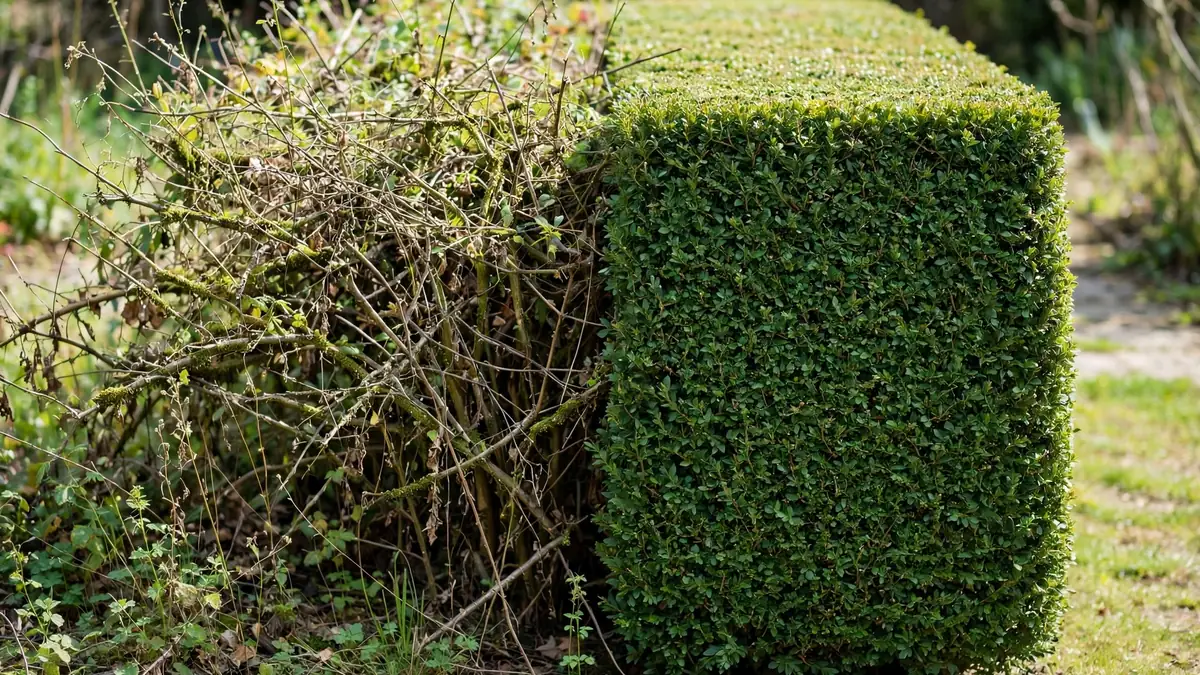
- “The hedge had grown ___ over the summer; by autumn it was clipped and ___.” Fill the second gap.
Answer: neat (or well-kept) — care restored to a neglected thing. - Which opposite can describe a person but never a room: tidy or well-groomed?
Answer: well-groomed. - True or false: immaculate is the everyday opposite of unkempt.
Answer: False — it is the strongest one; neat is the everyday opposite.
Short Q&A
What is the best opposite of unkempt?
Neat. It reverses both the disorder and the neglect in one word, for people, places and work alike.
Is “tidy” or “neat” better?
Tidy for spaces and things put away; neat for appearance and arrangement generally. “A tidy room with neat piles of paper” uses both exactly.
What is the opposite for a garden or a house?
Well-kept. It names the repeated care whose absence makes a place unkempt.
Does unkempt only describe hair?
No hair is where it started. Lawns, rooms, clothes, handwriting and even arguments are all called unkempt when they show neglect.
Key Takeaways
- Neat is the core opposite of unkempt; tidy covers spaces, well-groomed covers people, well-kept covers things maintained over time, and immaculate is the strongest form.
- Unkempt means care that did not happen every true opposite names care that did.
- Beautiful and expensive are judgements of nature and money, not of care.

I’m Daniel Carter, a language enthusiast and content writer focused on the fascinating world of antonyms and vocabulary. I break down word meanings and opposites into simple, practical guides helping readers build a richer vocabulary, understand language more deeply, and speak or write with greater confidence.