What is the opposite of legislation?
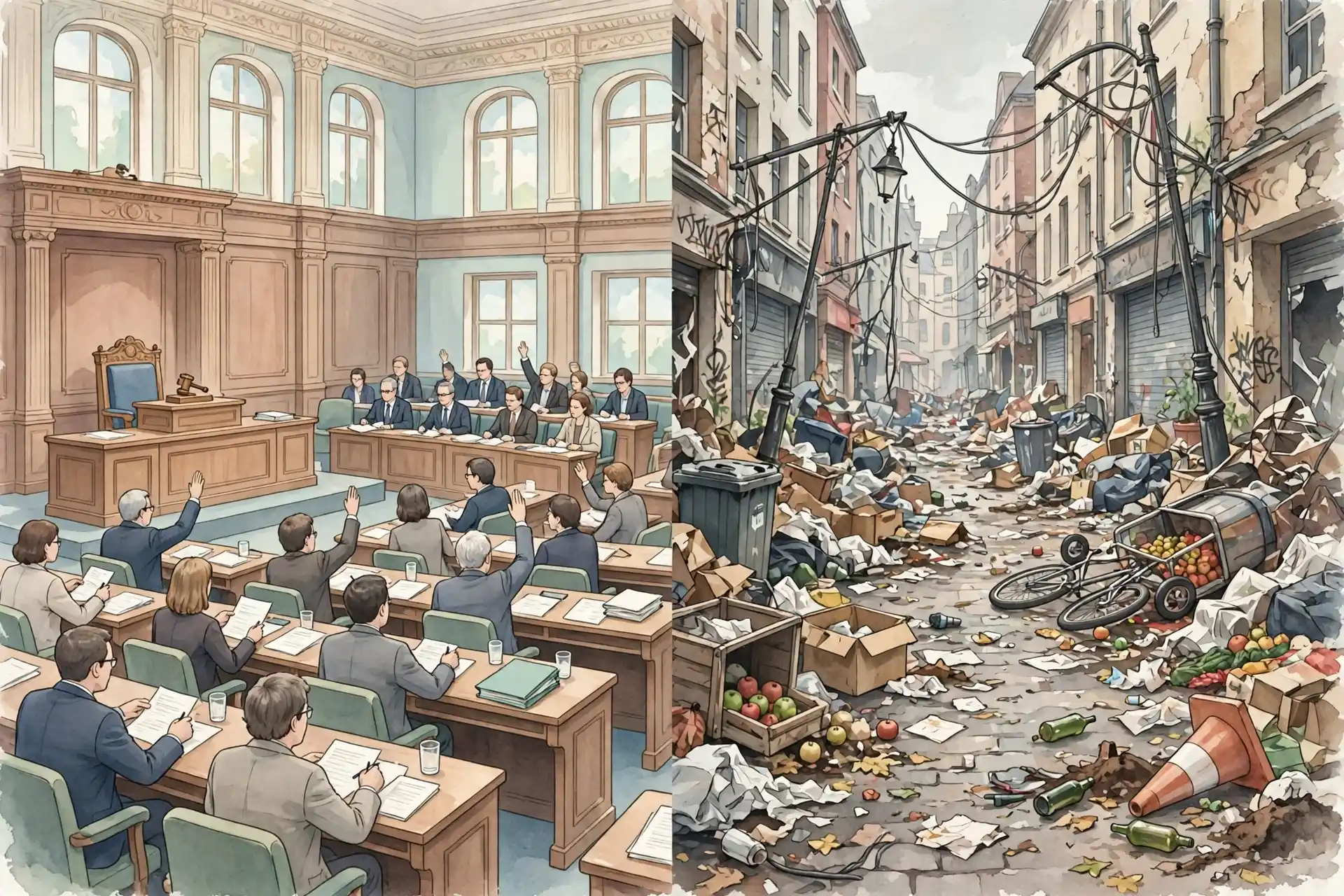
The opposite of legislation is lawlessness or anarchy life without laws instead of life governed by them. Words like deregulation, repeal, and abolition mark the removal of laws, where legislation marks their making.
For the full dictionary entry, see legislation on Merriam-Webster.
What Legislation Actually Means
The most common antonym of legislation is lawlessness. Legislation means the action of making laws, and the laws themselves: the rules a parliament or other official body makes, which carry the force of authority. Its opposite is a world without those rules. Lawlessness is the direct opposite, the absence of law and order, while anarchy is the grander one, a state with no government and no authority at all. Deregulation sits in between, the removal of rules rather than their absence from the start.
Legislation Against Its Opposites
| Word | Meaning | Example |
|---|---|---|
| Legislation | The making of laws, or the laws themselves | Parliament passed new legislation on housing. |
| Lawlessness | The absence of law and order | Lawlessness spread when the courts closed. |
| Anarchy | A state with no government or authority | The country slid into anarchy after the coup. |
| Deregulation | The removal of government rules | Deregulation opened the market to new firms. |
| Repeal | The official cancellation of a law | The repeal of the ban took effect in spring. |
Where the Word Legislation Comes From
Legislation is a Latin word at heart. It comes from the Late Latin phrase lēgis lātiō, literally “the proposing of a law,” from lēx, law, and lātiō, a bringing or proposing. English first used it in 1606, in the sense of the action of legislating. The word entered English in the early 17th century, when parliaments were becoming the main makers of law. Before that, kings and customs made the rules. The history explains the meaning: legislation is not just any rule, it is a rule proposed, debated, and passed by a proper body, then given the force of law.
What You Will Take Away
After reading this guide, you will know:
- The main antonym of legislation
- Ten useful opposites and when each one fits
- How legislation differs from deregulation
- How to use these words correctly in sentences
Ten Opposites of Legislation
1. Lawlessness (noun)
Meaning: The absence of law and order, a state where laws are ignored or do not work.
Examples:
- Lawlessness spread when the courts closed.
- The town feared lawlessness after the police left.
2. Anarchy (noun)
Meaning: A state with no government or authority, where no one is in charge.
Examples:
- The country slid into anarchy after the coup.
- Without a ruler, the region fell into anarchy.
3. Deregulation (noun)
Meaning: The removal of government rules and controls from an industry or activity.
Examples:
- Deregulation opened the market to new firms.
- The airline industry changed after deregulation.
4. Repeal (noun)
Meaning: The official cancellation of a law, so it no longer has any force.
Examples:
- The repeal of the ban took effect in spring.
- Voters demanded the repeal of the old tax law.
5. Abolition (noun)
Meaning: The formal ending of a law, system, or practice.
Examples:
- The abolition of the tax took years of debate.
- Campaigners called for the abolition of the death penalty.
6. Disorder (noun)
Meaning: A lack of order, control, or organisation.
Examples:
- Disorder broke out at the stadium gates.
- The meeting ended in disorder and shouting.
7. Chaos (noun)
Meaning: Complete confusion and disorder, with nothing working as it should.
Examples:
- The new rules caused chaos at the border.
- Traffic fell into chaos when the lights failed.
8. Noncompliance (noun)
Meaning: Failure to follow a law, rule, or order.
Examples:
- Noncompliance with the safety rules led to fines.
- The firm was warned about noncompliance with the new act.
9. Disobedience (noun)
Meaning: Refusal to obey a law or a person in authority.
Examples:
- Disobedience to the curfew brought arrests.
- The soldiers were punished for disobedience.
10. Exemption (noun)
Meaning: Freedom from a law or duty that applies to other people.
Examples:
- Small firms won an exemption from the new tax.
- The charity claimed an exemption from the fees.
How to Choose the Right Opposite
Legislation wears several meanings, and each one takes a different opposite.
If legislation means the laws themselves, use lawlessness or anarchy. These name the world without laws. “Lawlessness spread when the courts closed.”
If legislation means the removal of rules, use deregulation. It covers rules taken away on purpose, usually to free a market. “Deregulation opened the market to new firms.”
If legislation means one specific law being ended, use repeal or abolition. Repeal cancels a law; abolition ends a law or a whole system. “The repeal of the ban took effect in spring.”
If legislation means breaking the rules rather than removing them, use noncompliance or disobedience. These describe people who do not follow the law. “Noncompliance with the safety rules led to fines.”
Legislation in Daily Sentences
- In daily life: “Parliament passed new legislation on housing, but lawlessness grew in the empty districts.”
- At school: “The class studied the new legislation and its repeal the following year.”
- In the news: “Legislation on clean air passed, while deregulation cut the old factory rules.”
- In a story: “The town lived under strict legislation until anarchy swept the streets.”
- In business: “The firm welcomed the legislation but feared noncompliance fines.”
- In conversation: “He got an exemption from the new law, so the legislation never touched him.”
Legislation or Deregulation?
They are the classic pair, and writers mix them up more than they misuse them. Legislation means the making of laws: a parliament proposes a rule, votes on it, and gives it force. Deregulation means the taking away of rules: a government removes controls, usually to let a market run free. The overlap comes with reform: a reform can add laws in one place and remove them in another, so one bill can be both. When the state is adding rules, legislation is the word. When it is cutting them, deregulation fits better. The pair comes from Latin itself: legislation from lēgis lātiō, the proposing of a law, and deregulation from de-, away, plus regula, a rule. One builds the rule book, and the other tears pages out of it.
Using Legislation Correctly
Legislation is a noun, usually uncountable. It names the action of making laws or the laws themselves: new legislation, housing legislation, the legislation of the 1990s. Its verb form is legislate, meaning to make laws, and the person who does it is a legislator. Its useful opposites are nouns too: lawlessness, anarchy, deregulation, and repeal. Watch out for legislature, which is not an opposite at all: it is the body that makes the laws, such as a parliament or congress. Legislation never takes an -s plural in normal use: say “pieces of legislation” or “new laws” instead of “legislations” in formal writing, and prefer the plain phrase.
Mistakes People Make with Legislation
- ❌ Incorrect: “The legislation caused lawlessness in the market.” ✅ Correct: “The deregulation caused chaos in the market.” Legislation makes rules, so it cannot cause lawlessness by itself.
- ❌ Incorrect: “Parliament voted for anarchy.” ✅ Correct: “Parliament voted for new legislation.” A parliament makes laws; it does not vote for anarchy.
- ❌ Incorrect: “The repeal added new rules to the book.” ✅ Correct: “The legislation added new rules to the book.” Repeal removes laws, so it cannot add rules.
- ❌ Incorrect: “Legislation and deregulation mean the same thing.” ✅ Correct: “Legislation makes laws, and deregulation removes them.” They are opposites, not twins.
Check Your Understanding
- Choose the correct antonym: “When the courts closed, ___ spread through the town.” A. legislation B. lawlessness C. regulation — Answer: B. lawlessness, because the town lost law and order.
- Fill in the blank: “The ___ of the ban took effect in spring.” — Answer: repeal, the official cancellation of a law.
- True or false: “Deregulation means making new laws.” — False. Deregulation means removing government rules, the opposite of making them.
Your Legislation Questions, Answered
What is the opposite of legislation?
The most common opposite of legislation is lawlessness or anarchy — life without laws instead of life governed by them.
What is a stronger opposite of legislation?
Anarchy is stronger than lawlessness, because it means no government or authority at all, not just laws being ignored. Deregulation is narrower: it means the removal of specific rules, not the absence of all law.
Can “deregulation” always replace the opposite of legislation?
No. Deregulation fits the removal of rules from an industry, but lawlessness fits a place with no working laws, and repeal fits the cancellation of one specific law, so the specific word is usually better.
What is the difference between legislation and deregulation?
Legislation is the making of laws by a parliament or other body. Deregulation is the removal of those laws or rules. Legislation builds the rule book; deregulation tears pages out of it.
Is legislation appropriate in formal writing?
Yes. Legislation is a standard word in law, politics, news, and academic writing, and it suits formal and informal contexts alike.
The Last Word on Legislation
The opposite of legislation depends on the sense: lawlessness and anarchy answer the absence of law, deregulation answers the removal of rules, and repeal answers the cancellation of one law. Keep legislation for the making of laws, remember that it comes from Latin lēgis lātiō, the proposing of a law, and you will choose the right opposite every time.

I’m Moazama Akbar, an English language researcher and content writer with a passion for helping people build stronger vocabulary and language skills. I create clear, well-researched guides on antonyms, opposite words, and word meanings, designed to make English learning simple, practical, and enjoyable for students, writers, and learners everywhere.