Grand’s Opposite in a Nutshell
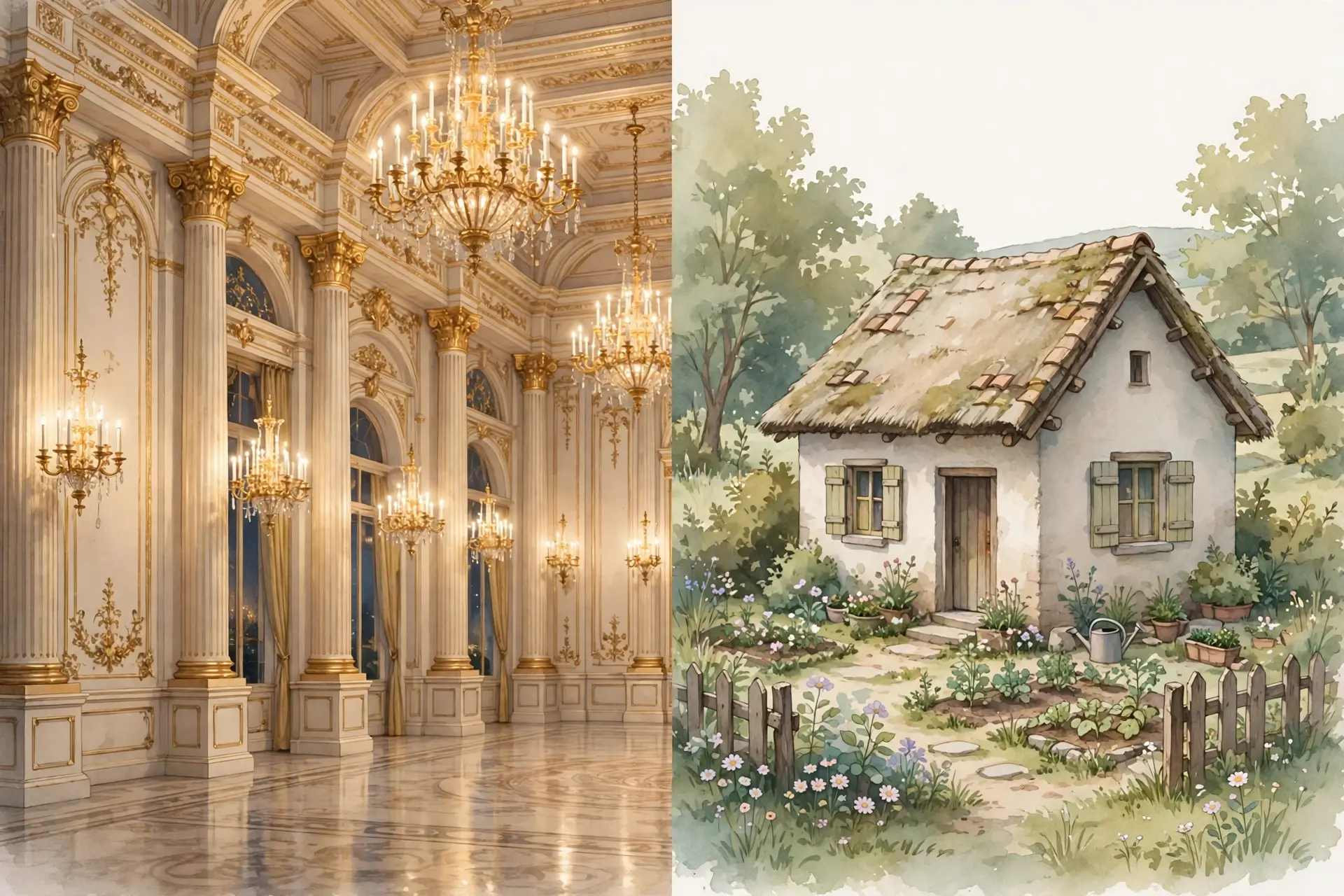
What is the opposite of grand? The opposite of grand is small or modest plain and unremarkable instead of large, impressive, and magnificent. Words like humble, ordinary, and minor mark quiet, simple things, where grand marks size, splendour, and importance.
For the full dictionary entry, see grand on Merriam-Webster.
What Grand Really Means
The most common antonym of grand is small. Grand is an adjective, and Merriam-Webster defines it as “having more importance than others: foremost” and “large and striking in size, scope, extent, or conception.” Small is the direct opposite, the broadest word for what is little in size or scale, while modest is the best one for what is simple and unpretentious, and humble fits people and beginnings that are lowly rather than lofty. Grand covers size, splendour, and importance, so its opposites split three ways.
Grand Next to Its Opposites
| Word | Meaning | Example |
|---|---|---|
| Grand | Large and striking; magnificent | The grand ballroom held five hundred guests. |
| Small | Little in size or scale | The small cottage sat at the edge of the wood. |
| Modest | Simple and unpretentious | She lived in a modest flat near the station. |
| Humble | Low in rank or importance; unassuming | The humble clerk worked quietly for years. |
| Ordinary | Plain and everyday; nothing special | It was an ordinary Tuesday, nothing grand about it. |
The Story Behind the Word Grand
Grand is a Latin word at heart. It comes from Anglo-French grant, grand, “large, great, grand,” from Latin grandis, “great, large, full-grown.” English first used it as an adjective in the 14th century. The picture inside the word is simple: something grown to full size. The same Latin root gave English grandeur, grandiose, and aggrandize all words about growing large. Grand also lives in the prefix grand-, which marks one generation removed, as in grandfather and granddaughter. As a noun, grand has two famous lives of its own: a grand piano, and slang for a thousand dollars, a sense first known in 1830. So grand began as a word about growing large, and it stayed a word about growing large: it names what is big, splendid, and foremost.
Inside This Grand Guide
After reading this guide, you will know:
- The main antonym of grand
- Ten useful opposites and when each one fits
- How grand differs from modest
- How to use these words correctly in sentences
Ten Opposites of Grand
1. Small (adjective)
Meaning: Little in size, amount, or scale; not large.
Examples:
- The small cottage sat at the edge of the wood.
- She kept her savings in a small tin box.
2. Little (adjective)
Meaning: Small in size or amount; also young or unimportant.
Examples:
- The little garden grew herbs and a single rose.
- He played only a little part in the grand ceremony.
3. Modest (adjective)
Meaning: Simple and unpretentious; not showy or grand.
Examples:
- She lived in a modest flat near the station.
- He gave a modest speech and thanked everyone briefly.
4. Humble (adjective)
Meaning: Low in rank or importance; not proud or grand.
Examples:
- The humble clerk worked quietly for years.
- She came from humble beginnings in a small village.
5. Minor (adjective)
Meaning: Lesser in importance, size, or rank; not grand or main.
Examples:
- He played a minor role in the grand production.
- The plan needed only minor changes.
6. Insignificant (adjective)
Meaning: Too small or unimportant to matter; without grandeur.
Examples:
- The sum was insignificant beside the grand fortune.
- She felt insignificant in the grand hall.
7. Ordinary (adjective)
Meaning: Plain and everyday; nothing special or grand.
Examples:
- It was an ordinary Tuesday, nothing grand about it.
- He wore an ordinary suit to the grand ball.
8. Plain (adjective)
Meaning: Simple in design or manner; without splendour or decoration.
Examples:
- The plain room had white walls and a wooden chair.
- She preferred a plain dress to a grand gown.
9. Lowly (adjective)
Meaning: Low in rank, position, or importance; humble and ungrand.
Examples:
- The lowly servant opened the grand doors.
- He rose from a lowly job to lead the company.
10. Unimpressive (adjective)
Meaning: Not striking or admirable; failing to impress, unlike grand.
Examples:
- The unimpressive hall disappointed the grand crowd.
- His first speech was unimpressive, but he improved fast.
Picking the Right Opposite for Grand
Grand wears several meanings, and each one takes a different opposite.
If grand means large in size, use small or little. These name things that are little in size or scale. “The small cottage sat at the edge of the wood.”
If grand means splendid or magnificent, use plain or unimpressive. They cover rooms, clothes, and halls that carry no splendour. “The plain room had white walls and a wooden chair.”
If grand means important or foremost, use minor or insignificant. They cover roles, sums, and parts that matter little. “He played a minor role in the grand production.”
If grand means proud or showy, use modest or humble. They cover people and styles that are simple and unassuming. “She lived in a modest flat near the station.”
Grand in Everyday Sentences
- In daily life: “It was an ordinary Tuesday, nothing grand about it.”
- At school: “The little garden grew herbs and a single rose.”
- In the news: “He played a minor role in the grand production.”
- In a story: “The lowly servant opened the grand doors.”
- In business: “She came from humble beginnings in a small village.”
- In conversation: “He wore an ordinary suit to the grand ball.”
Grand or Modest?
Grand and modest are the classic pair, and writers mix them up more than they misuse them. Grand means large and striking, splendid or foremost: a grand ballroom holds five hundred guests, a grand plan spans years. Modest means simple and unpretentious: a modest flat holds a family and a quiet evening, a modest speech thanks everyone briefly. The overlap comes with plans and events: a modest wedding can still be lovely, and a grand wedding is big and showy. When the thing is big, splendid, or foremost, grand is the word. When the thing is simple, quiet, and unshowy, modest fits better. The pair comes from different roots: grand from Latin grandis, “great, large, full-grown,” and modest from Latin modestus, “moderate, keeping within measure.” One began in largeness, and the other began in measure.
Grand as a Word: Forms and Uses
Grand is an adjective, and it takes the comparative grander and the superlative grandest, as in “a grander hall” and “the grandest ball of the year.” Its noun form is grandeur, the quality of being grand and splendid, and its adverb form is grandly, as in “he entered grandly.” Its useful opposites are adjectives too: small, modest, humble, and ordinary. Grand also works as a noun in its own right: a grand piano, and slang for a thousand dollars, as in “the car cost twenty grand,” a sense first known in 1830. The prefix grand- marks one generation removed, as in grandfather and granddaughter. Watch out for grand total, which means the final sum of everything. The opposite of a grand piano is not small but an upright piano, so keep the size opposites for things that are actually large.
Mistakes People Make with Grand
- ❌ Incorrect: “The grand cottage sat at the edge of the wood.” ✅ Correct: “The small cottage sat at the edge of the wood.” Grand means large and striking; a tiny cottage is small.
- ❌ Incorrect: “She wore a modest gown covered in diamonds to the ball.” ✅ Correct: “She wore a grand gown covered in diamonds to the ball.” Modest means simple and unshowy; a diamond-covered gown is grand.
- ❌ Incorrect: “He played a grand role and spoke only one line.” ✅ Correct: “He played a minor role and spoke only one line.” A one-line part is minor, not grand.
- ❌ Incorrect: “It was a grand Tuesday, nothing special about it.” ✅ Correct: “It was an ordinary Tuesday, nothing special about it.” An unremarkable day is ordinary, not grand.
Test What You Learned About Grand
- Choose the correct antonym: “The ___ cottage sat at the edge of the wood.” A. grand B. small C. magnificent — Answer: B. small, because a tiny cottage is small.
- Fill in the blank: “He played a ___ role in the grand production.” — Answer: minor, the word for a small, unimportant part.
- True or false: “Grand and modest mean exactly the same thing.” — False. Grand means large and striking; modest means simple and unpretentious.
Grand Questions, Answered
What is the opposite of grand?
The most common opposite of grand is small or modest — plain and unremarkable instead of large, impressive, and magnificent.
What is a stronger opposite of grand?
Insignificant is stronger than small, because it means too unimportant to matter at all, not just little in size. Unimpressive is also strong: it means failing to strike or admire.
Can “ordinary” always replace the opposite of grand?
No. Ordinary fits everyday things that are nothing special, but small fits size, minor fits importance, and modest fits simple, unshowy style, so the specific word is usually better.
What is the difference between grand and modest?
Grand means large and striking, splendid or foremost. Modest means simple and unpretentious. A grand ballroom holds five hundred guests; a modest flat holds a family and a quiet evening.
Is grand appropriate in formal writing?
Yes. Grand is a standard word in formal writing, and it suits descriptions of buildings, plans, and occasions well. In plain speech, “big” is often simpler when you mean size alone.
The Final Word on Grand
The opposite of grand depends on the sense: small and little answer size, plain and unimpressive answer splendour, minor and insignificant answer importance, and modest and humble answer showiness and pride. Keep grand for what is large, striking, and foremost, remember that it comes from Latin grandis, “great, large, full-grown,” and the right opposite will follow.

I’m Moazama Akbar, an English language researcher and content writer with a passion for helping people build stronger vocabulary and language skills. I create clear, well-researched guides on antonyms, opposite words, and word meanings, designed to make English learning simple, practical, and enjoyable for students, writers, and learners everywhere.